
Clean Up on Isle Delfino
The complex ecological dilemma and morality of Super Mario Sunshine.

Written By: Tiago Franco
By the turn of the millennium, few games tackled the importance of preserving the environment. Perhaps heavily polygon-based graphics made it hard to relate and convey such a message.
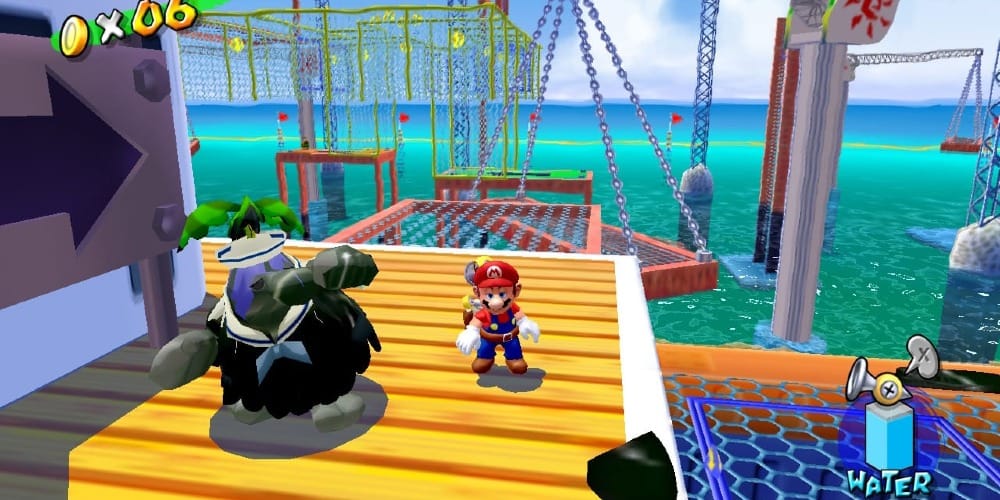
The GameCube’s generation of vastly improved graphics allowed for a greater sense of relatability. A few games addressed environmental change in tangential ways. Wind Waker’s submerged tales of a flooded Hyrule echoed scientists’ warnings about rising sea levels, and Pikmin’s post-apocalyptic remnants of household utilities and litter around the world mimicked the 1,000-year markers that landfills have on our environment. But no mission was as pertinent nor urgent as Super Mario Sunshine’s quest to clean up Delfino Isle.
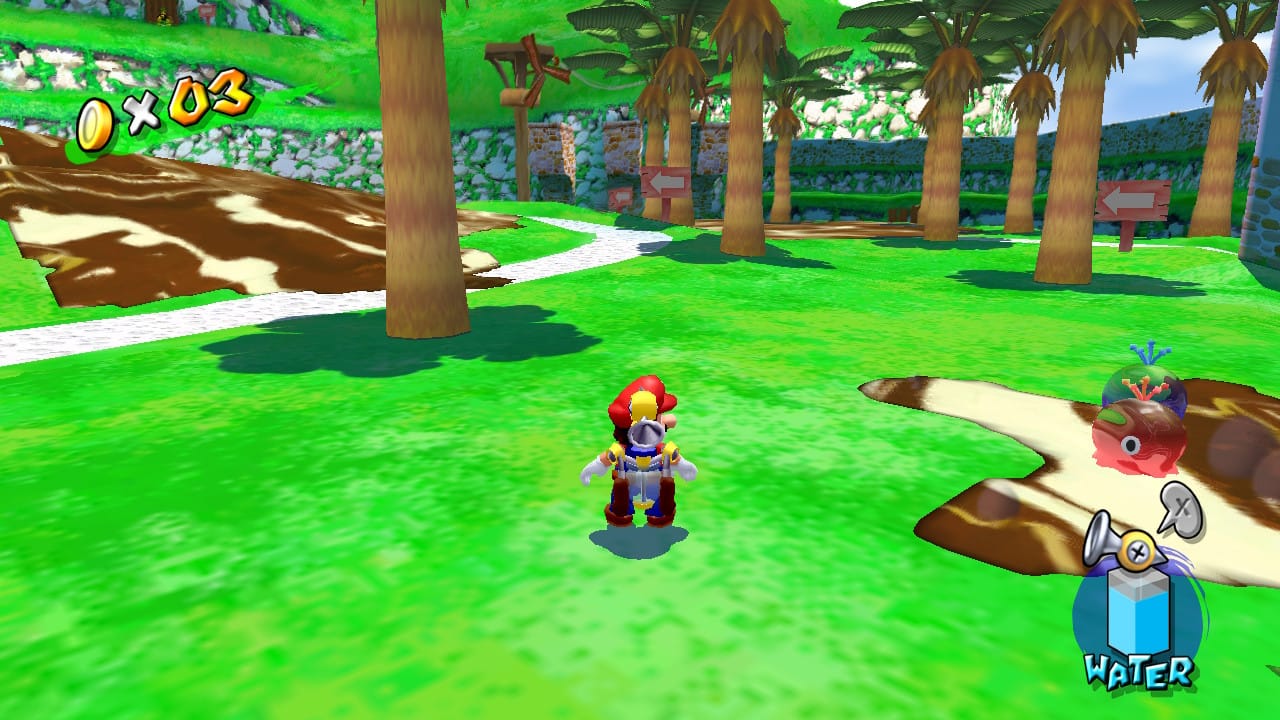
The premise of the game boils down to Mario being convicted of crimes he didn’t commit, tasked with washing away pollution caused by a look-alike menace. Employing the capabilities of F.L.U.D.D.’s 2-in-1 water spewing, jet-pack and cleaning mechanics, this provides a unique spin on a 3D Mario’s gameplay.
The title itself almost seems catered to today’s dire warnings of impending ecological collapse, but a quick look at events of the time reveals a mirror of its zeitgeist. In the 5-year lead-up to the game’s release, nearly 18 oil spills were reported worldwide, unleashing over 65,000 tons of crude oil into the ocean.
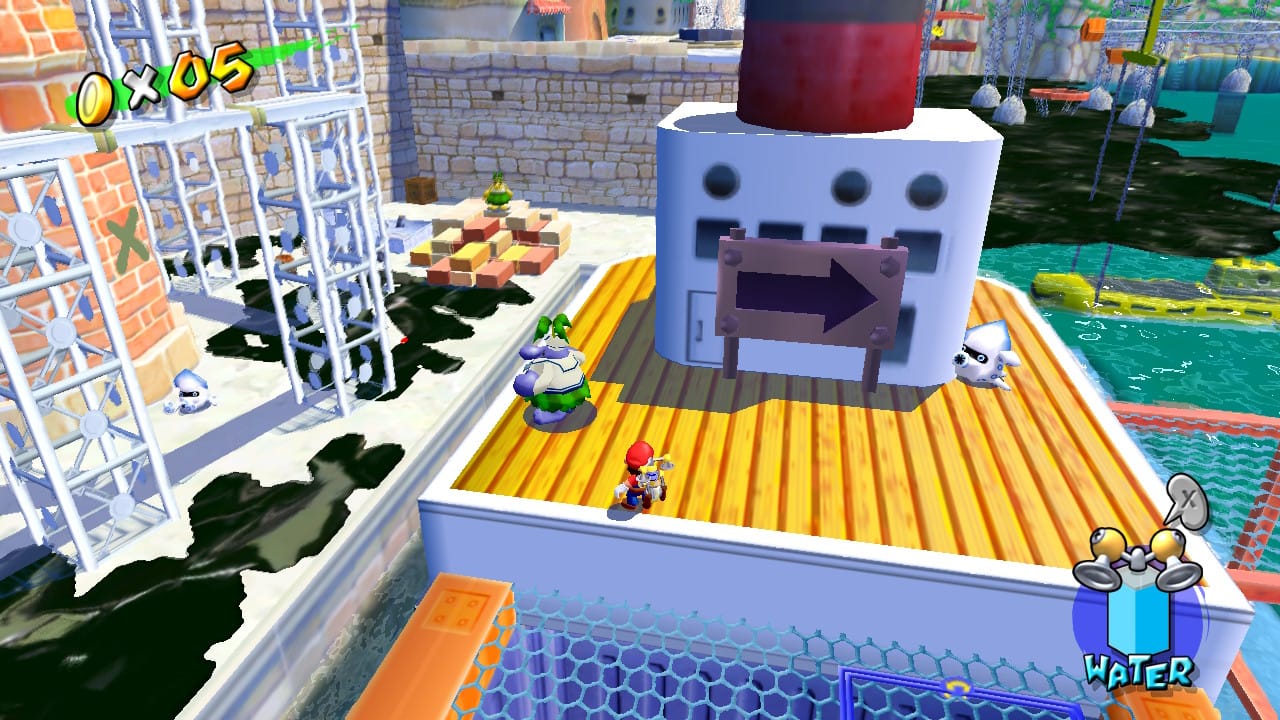
Shortly after Super Mario Sunshine was released in Europe, in October of 2002, my native country of Portugal saw its most catastrophic oil spill on record. An oil tanker burst, spilling 77,000 tonnes of heavy fuel oil deep into the coast of Galicia. Images of dead birds with sopping, black wings and murky shorelines haunted my parents’ television screen.
Super Mario Sunshine offered a respite against this backdrop in the dwindling days of my childhood. Feeling helpless at this ghastly sight of death, the game brought some comfort in restoring Isle Delfino to its former glory, but the haunting comparisons didn’t end there. Nearly 20 years later, with the new release of Super Mario Sunshine within the Super Mario 3D All-Stars collection, I couldn’t help but draw parallels between the game’s conflicts and global environmental issues.
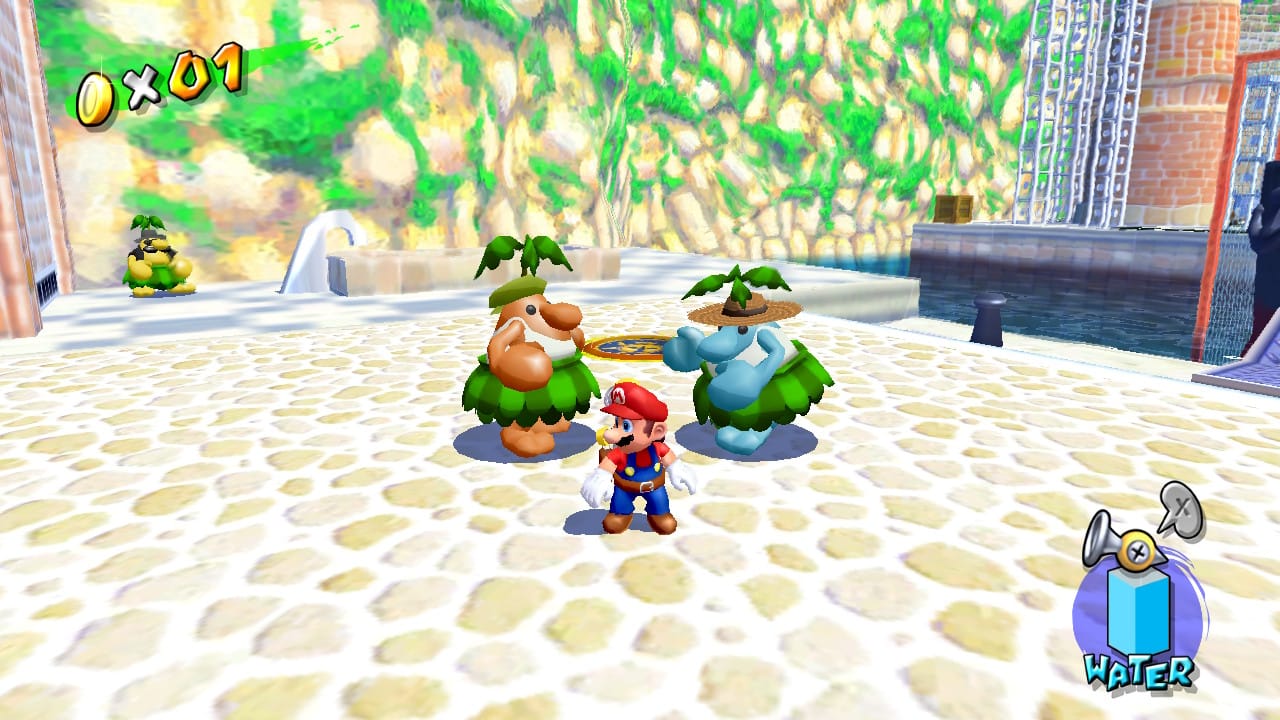
Take, for example, the Pianta people themselves. They suffer from one of the biggest cases of bystander effect I’ve seen in video games to date, perfectly encapsulating the apathetic, head-buried-in-sand attitude of many regarding climate change now. Consistently aloof and unhelpful, the Pianta are clueless about the cause of the ruin of their island. Isle Delfino drowns in sludge and goop as the Pianta idly stare at each other, barely investigating the cause, much less lifting a finger to help.
Of course, Mario games were never meant to be taken completely literally— they are surreal, whimsical platformers that offer escapism and thrills. However, Super Mario Sunshine is unique in this regard; its story is filled with twists and turns, and a morality tale hovering in the background. When Mario cleans the eel’s cavities in Noki Bay, whose bacteria was polluting the pristine waters, F.L.U.D.D. quickly reminds you, the gamer, to “brush your teeth.”
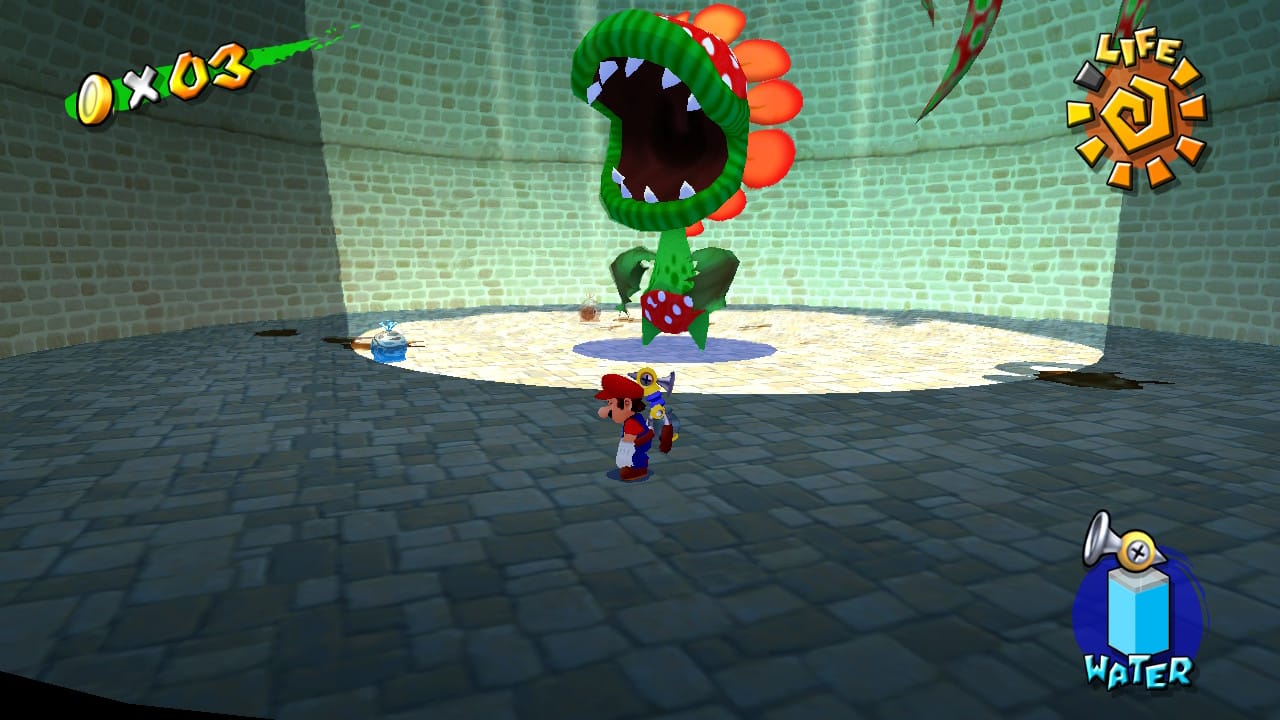
When Mario throws a flaming Chomp Chomp into a water spring so they can cool off, F.L.U.D.D. pleads with you to “be nice to your pets.” These tongue-in-cheek examples aren’t meant to lecture you, but they work similarly to Super Mario Sunshine’s overall message of ecological protection; covertly instilling values through its use of characters and environment. You need to keep in mind the target demographic for titles like this. This is morale Nintendo at its finest.
That said, I can’t in good conscience avoid mentioning Nintendo’s historically abysmal track record of protecting the environment. Just over a decade ago, back in 2008, Greenpeace ranked tech firms on their stated policies regarding toxic chemicals, recycling, and general climate change prevention. Nintendo ranked dead last, a position it held onto for two more years after that. Nintendo’s response pointed to the Wii, stating it was the most energy-efficient main console on the market, with a commendable average of 16 watts per gameplay compared to the PlayStation 3’s 150. Still, Nintendo made a verbal promise to improve its footprint.
Perhaps due to rising awareness of climate change issues, Nintendo pledged a comprehensive guide of eco-friendly compliance. Beyond Nintendo, global policy for the future of green gaming shows promise. The United Nations Environment Programme launched a campaign to get video games involved in advocating for the environment through its “Playing for the Planet” initiative, with a mission to “explore how, through [gaming’s] massive reach, [it] can inspire young people to learn and act in support of the environment.” Sony, Microsoft, and Google are some of the huge companies within the field of gaming who have pledged their allegiance to this campaign.
It may be naive to seek ecological purity out of any technological firm that relies on plastic and precious rare minerals to keep innovating, or to even consider that video games can single-handedly stop climate change if they shout about it enough, but it’s essential to raise awareness, educate people of all ages, and find sustainable and ethical alternatives to apply to its technology.
The eco-friendly cardboard packaging of games like Football Manager 20 or Untitled Goose Game, drastically reducing the use of plastic, is a huge step in the right direction for the physical delivery side of the industry. Another key push should be for the right to repair. Planned obsolescence is an ever-growing problem, and with dwindling resources in an overly consumerist world, this is a step that, not just gaming, but the entire technological sector needs to enable and encourage. These steps may seem small, but small gains in moments can strengthen the trend over time.
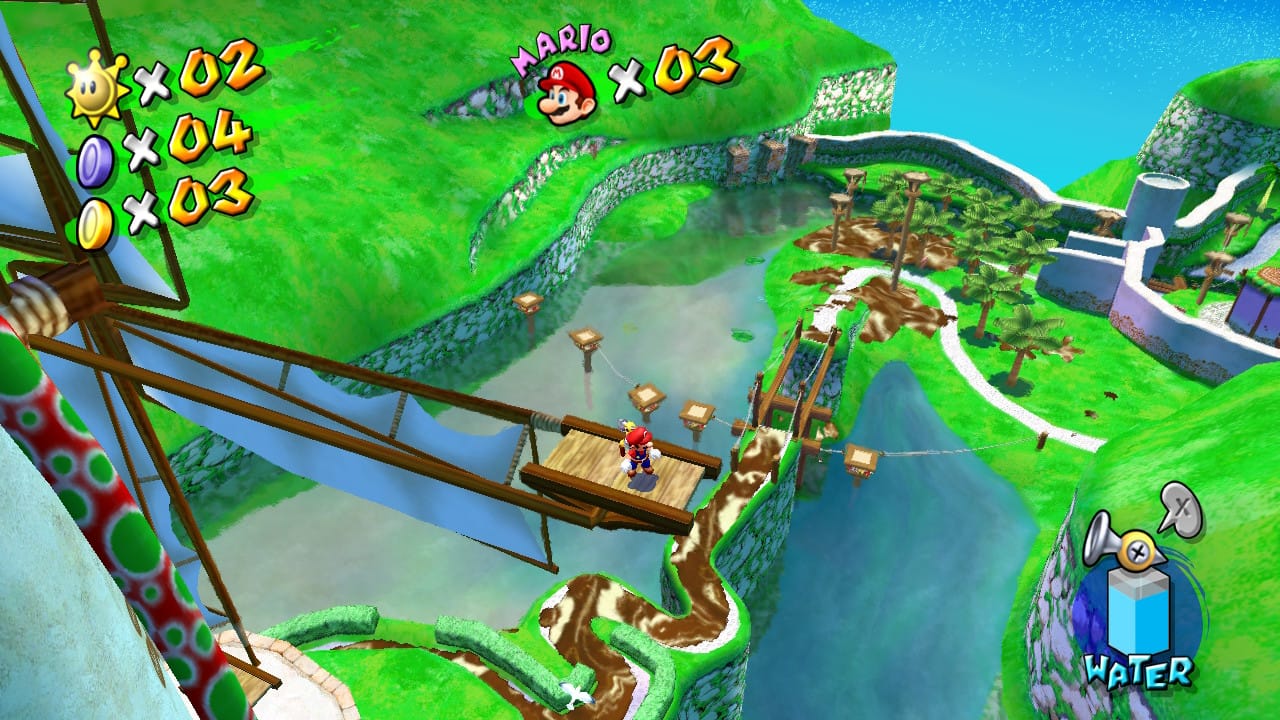
We can still appreciate Super Mario Sunshine’s gorgeous ode to nature, despite some of the stark realities we face. Even in a digital world, the natural features of Delfino Isle inspire hope and mirror the beauty of our IRL Earth; from the sprawling chromatic ancient structures of Noki Bay, to the unspoiled shores of Gelato Beach and its coral reef. Sunshine is packed with love and awe for nature in a kid-friendly way that Nintendo has down pat.
Turns out, cleaning up Isle Delfino, saving its residents, and restoring health to natural habitats is buckets of fun! Could subliminal environmentalism save the planet? Super Mario Sunshine shows players the importance of preserving rare ecosystems and how fickle and easy it is to ruin them with greed and selfishness. Nearly 20 years later, it is a game that holds up extremely well, and replaying it now reminds me of how it’s shaped my worldview and priorities. The message to preserve and persevere in making the world a better place still resonates.

Tiago is a documentarian based in Lisbon, Portugal. Candid reflections on humanity and culture inspire the work that he loves in both writing and photography.
*Originally published on playwatchrecord.com